June 21, 2003 - Carboniferous Fossils, Jefferson Co, AL
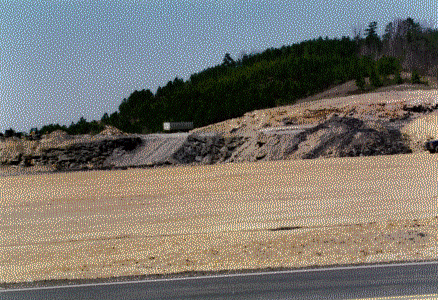
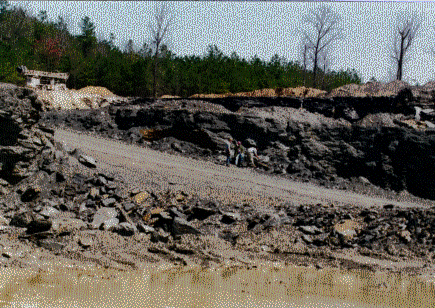
BPS members visited 2 areas of new road development and a small quarry in Jefferson County this month, making 3 stops total. We had not visited these locations before, so were not sure how prolific the sites would be.
(Photos courtesy Greg Mestler, Ron Beerman, and Vicki Lais.)
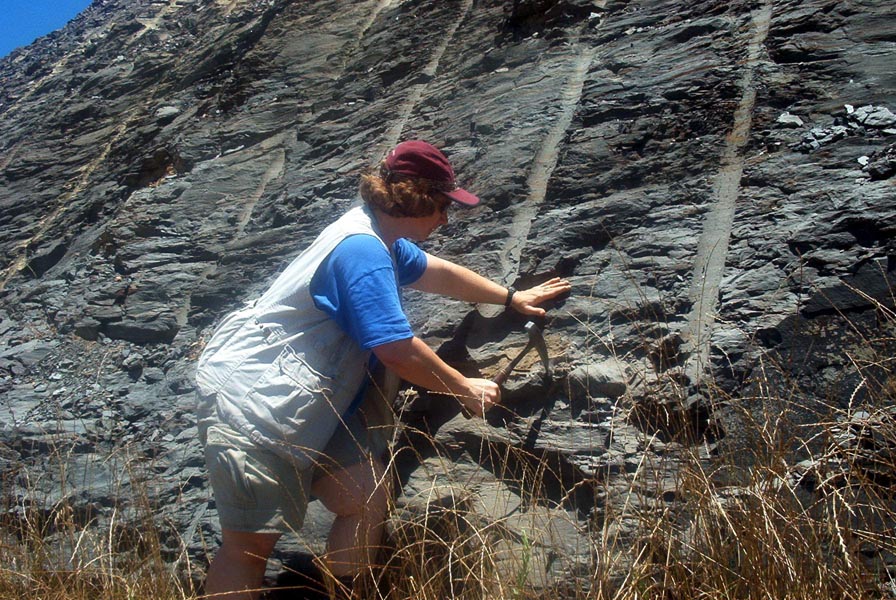
At stop #1, several brachiopods and a couple of slabs with small amphibian track prints were found.
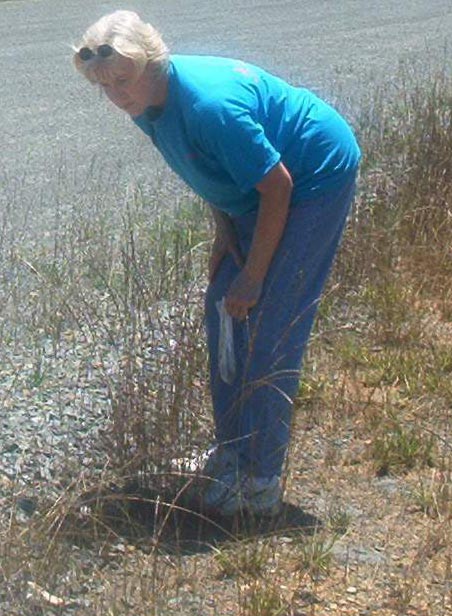
Jan found a number of brachiopods at this spot.
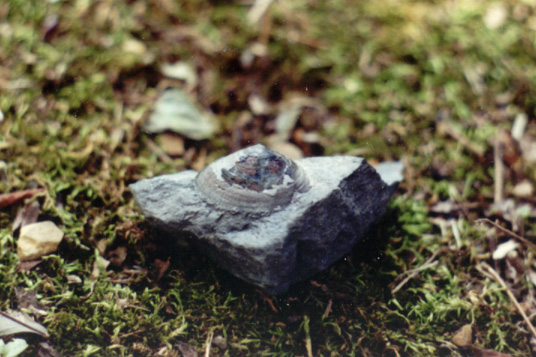
At stop #2, a number of nice limpets (gastropods) were found.
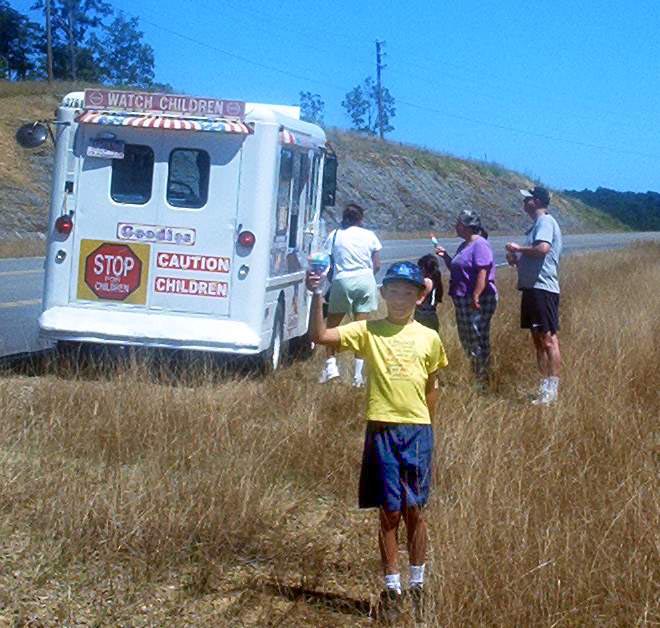
How's this for service? First time we ever had roadside delivery!
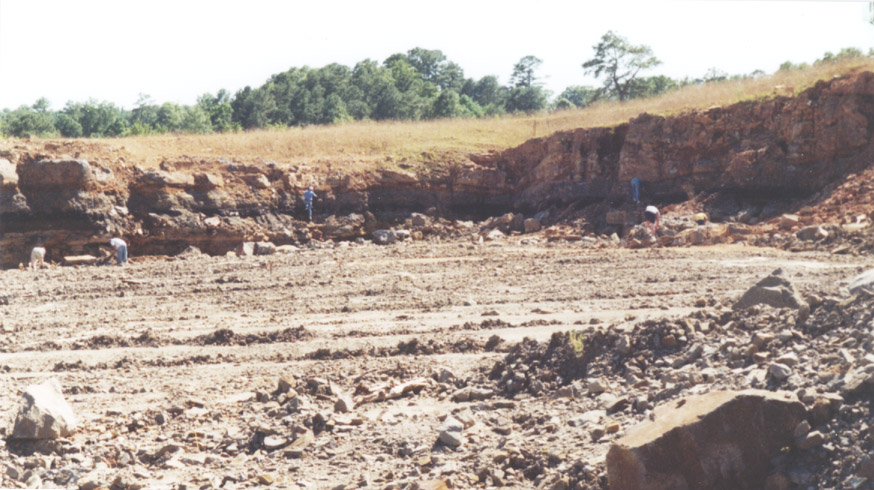
At stop #3, a number of plant fossils were found at a local quarry.
|
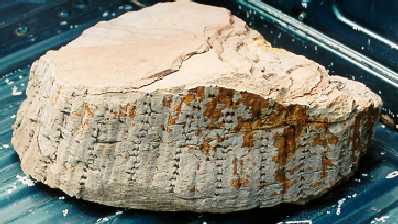
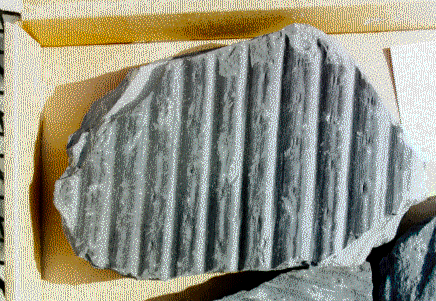
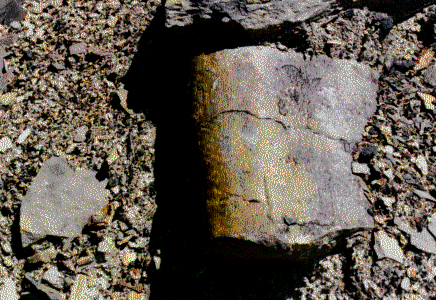
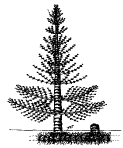
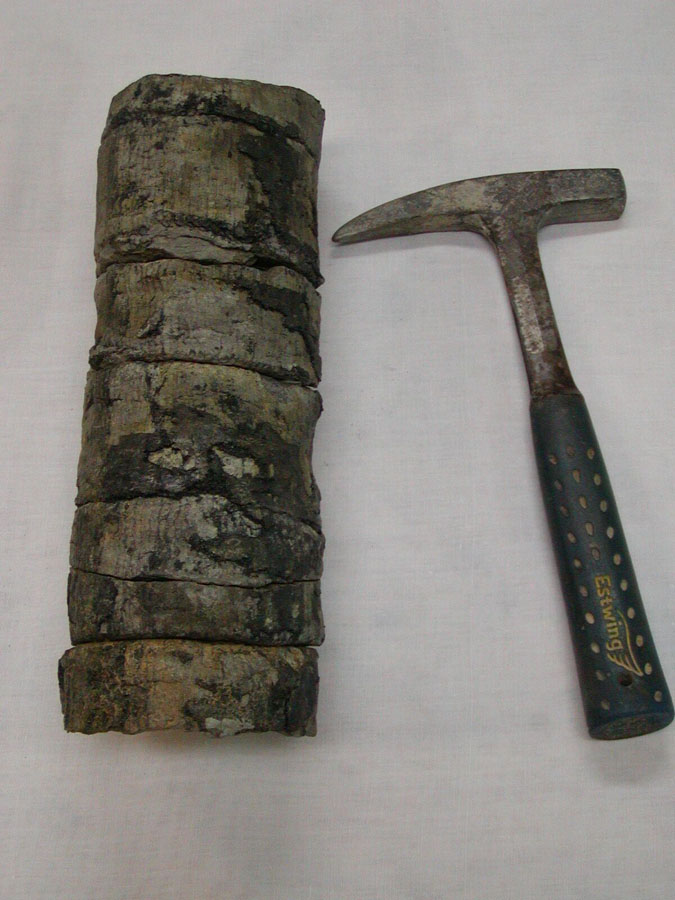
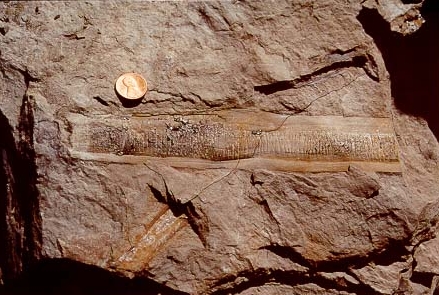
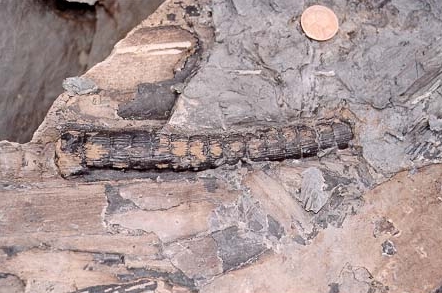
Picture of Calamites found just above a coal seam at one of the sites visited. It measures 101mm in diameter (approx 4 inches) and 304 mm (12”) in length. This cast of the central pith-cavity of the trunk is a very common fossil of Calamites. It is characterized by the articulation and the vertical ribbing between the nodes. The ribs are the imprints of the vascular strands. It measures 101mm in diameter (approx 4 inches) and 304 mm (12”) in length. This tree, in size up to 20 meters, grew during the Carboniferous period, about 320-350 million years ago. (This specimen found by Ron, Claire got the other half, which is about the same size.) |
|
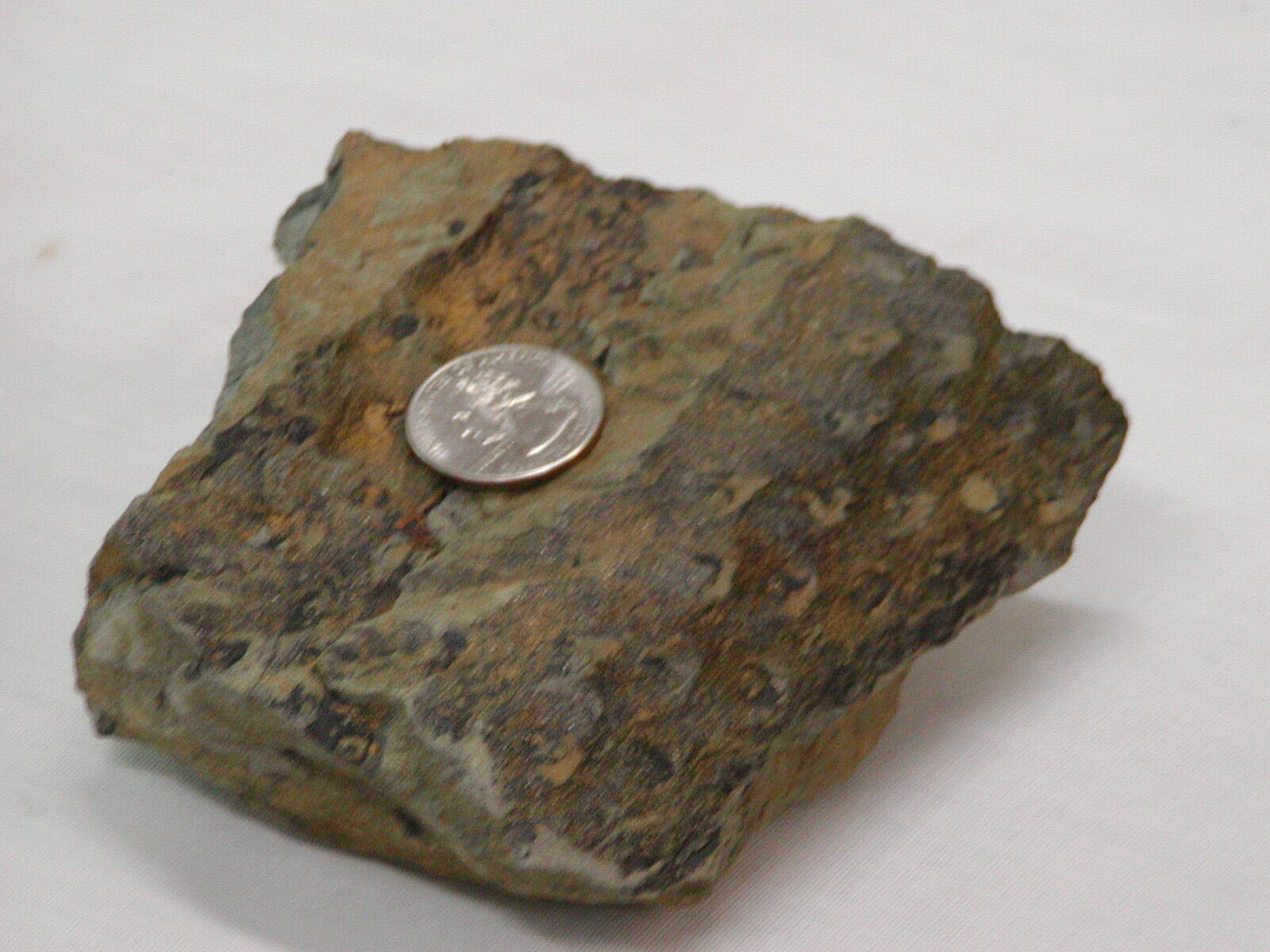
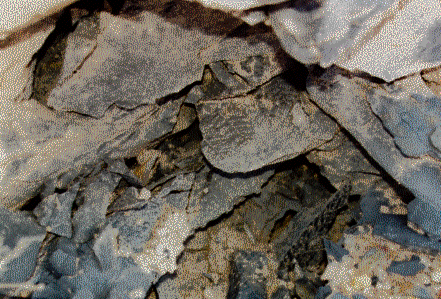
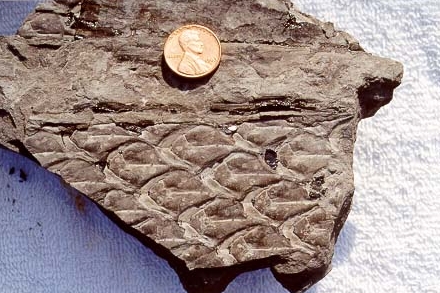
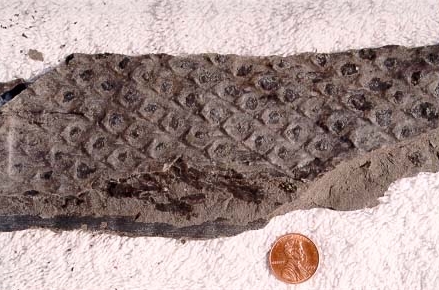
Stigmaria Ficoides. This is a fossilized root of the Sigillaria tree. This piece measures 102 mm by 114 mm. It was found near a coal seam. This plant lived during the Pennsylvanian Period of the Paleozoic Era 320-350 mya around swamps or lakes grew to several meters in height. Its modern day relatives are the small club mosses and lycopods. The round nodes on the surface of stigmaria are scars where rootlets were once attached and arranged in a radial fashion about stigmaria like the bristles of a bottle brush. During their life these trees shed parts of their outer bark.
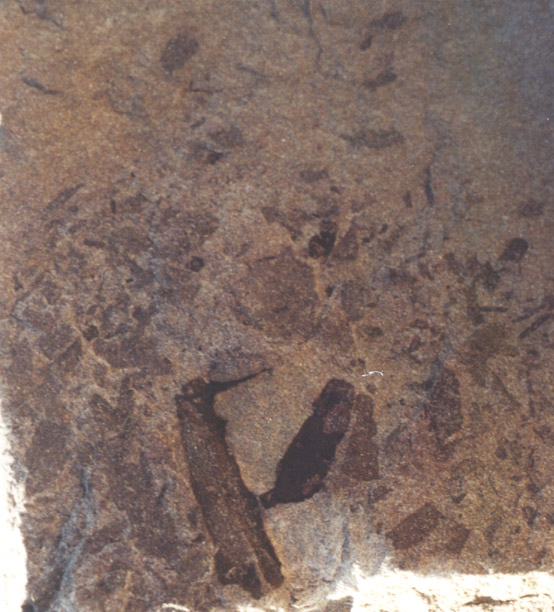
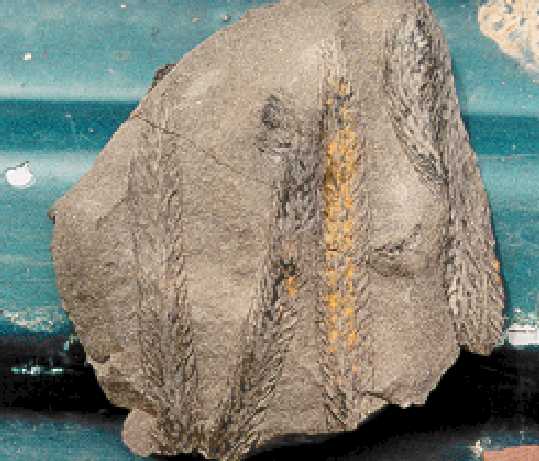
Possibilities - a spore case, or Neuropteris leaf.
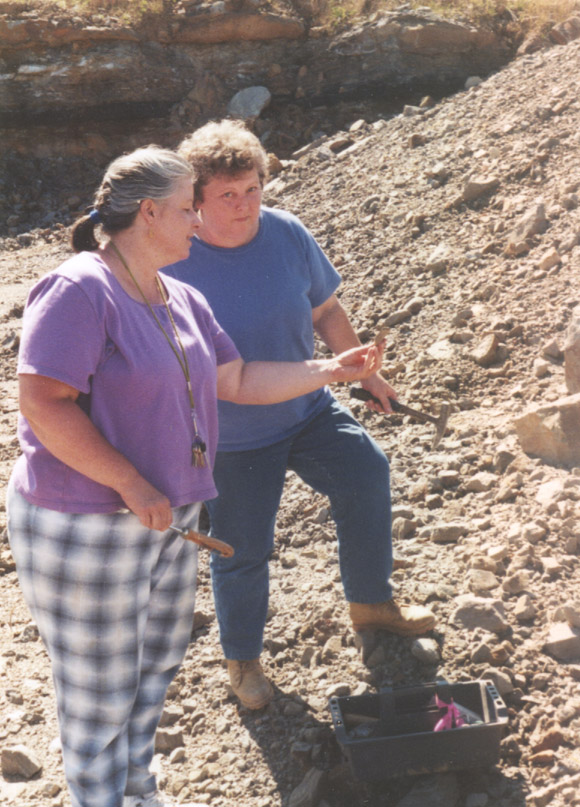
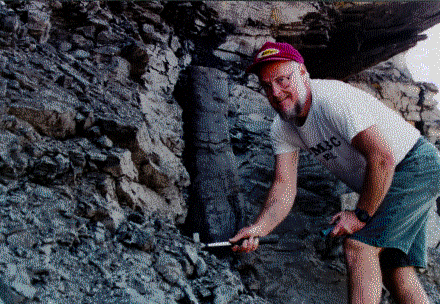
Leisa & Winnie discussing the current find.
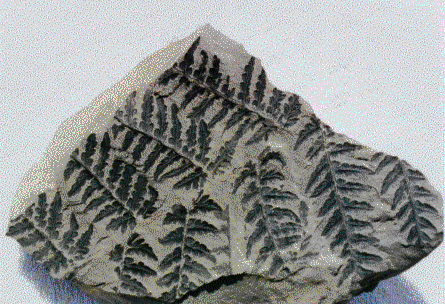
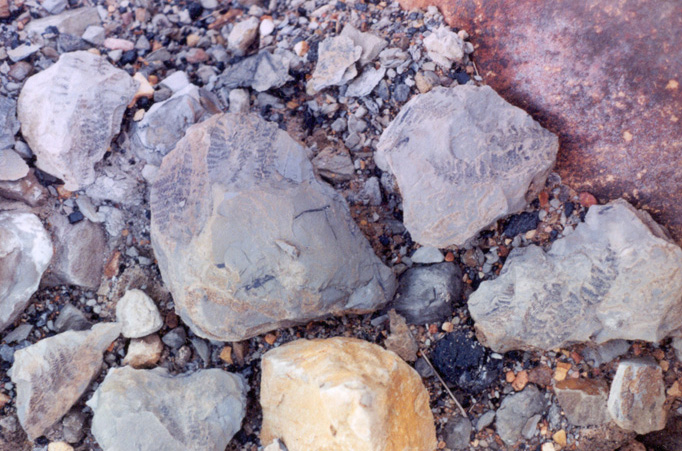
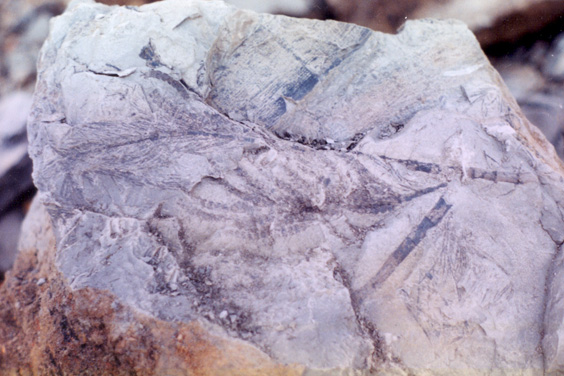
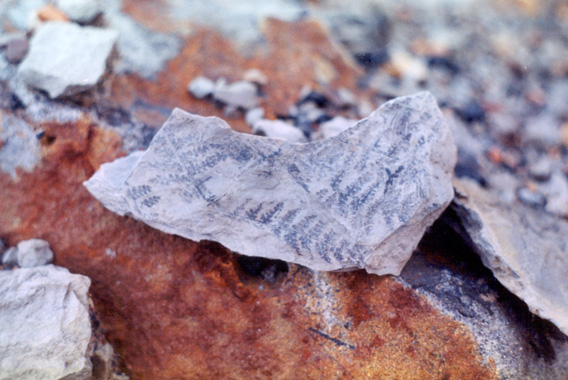
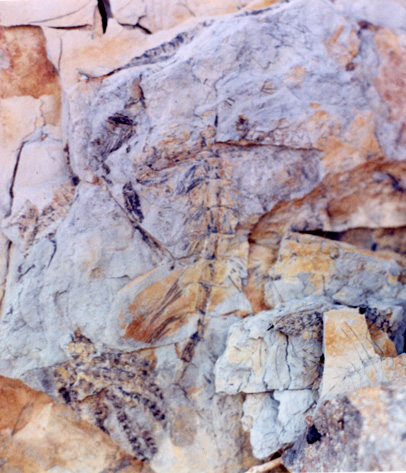
Some fern material found at the site is shown below.
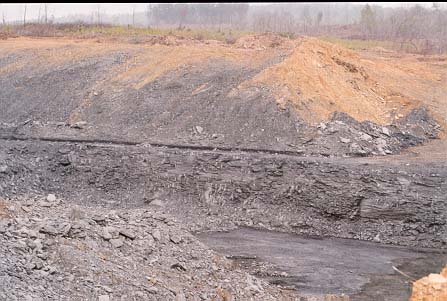
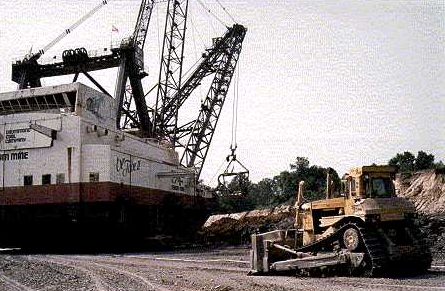
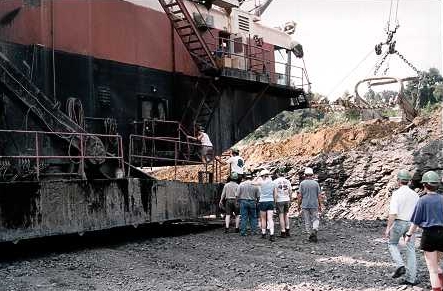
 The machine uses a 180 ton metal bucket to drag soil and rock forward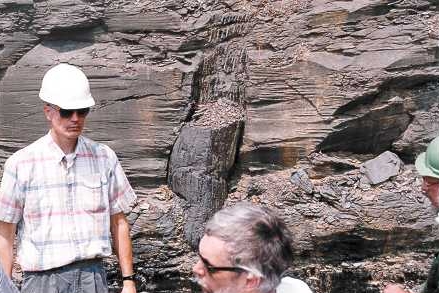
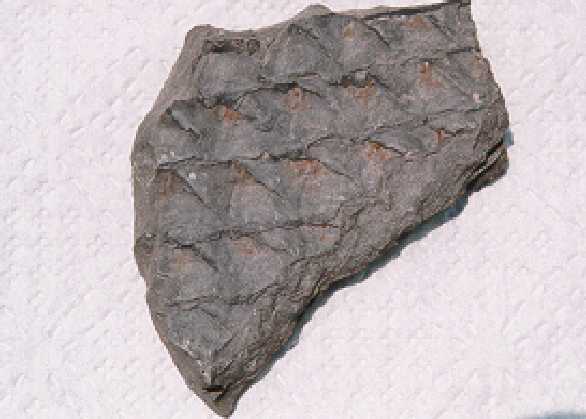 One of the most interesting fossils I noticed at this site was a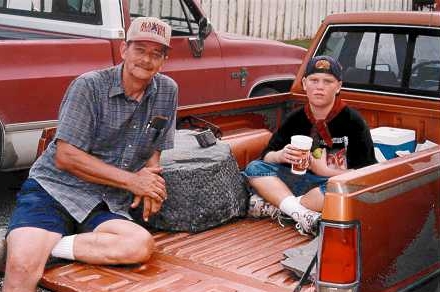
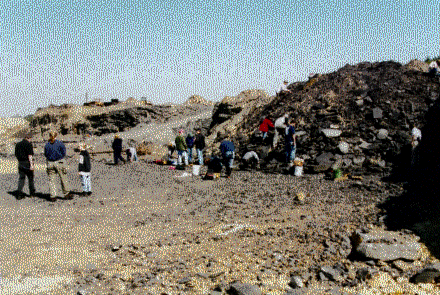
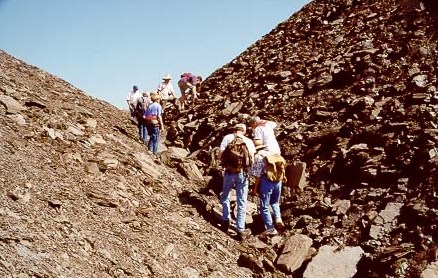
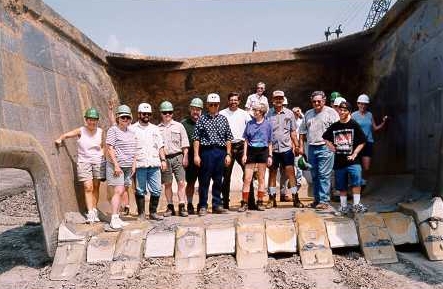
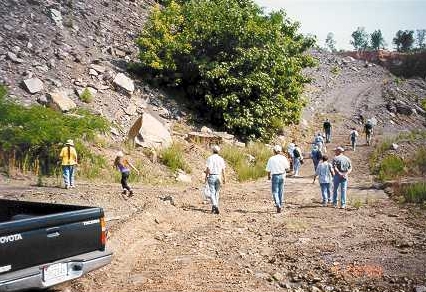 The site turned out to be a particularly good one for finding a variety of Carboniferous period plant fossils. The area was so vast that even with 15 people we really did not explore it all. Many rock piles surround an open area where we could park our vehicles. Fossils of Calamites, including 3D stem casts, stem impressions, foliage, and cones were abundant in some areas.
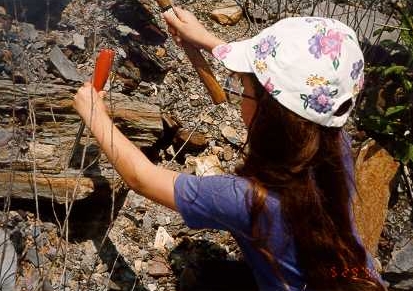 There were numerous highlights of this trip. One attendee showed me a rare (so far as I know) cast fossil of a small part of a stem of Cordaites, a gymnospermous tree with no modern relatives. The stem of this tree consists of a series of horizontal ridges and is easily distinguished from Calamites, but I had never seen one this nice before. Some very nice pieces of Calamites itself were found. The inimitable Ken Hoyle showed several of us two spectacular Calamites casts he found, each about 6 inches long and 4-5 inches in diameter. The two pieces were obviously part of the same plant, but he could not find any of the missing parts.