Visitor
Selma Group

May 22, 2004 - Cretaceous Fossils, Sumter Co, AL
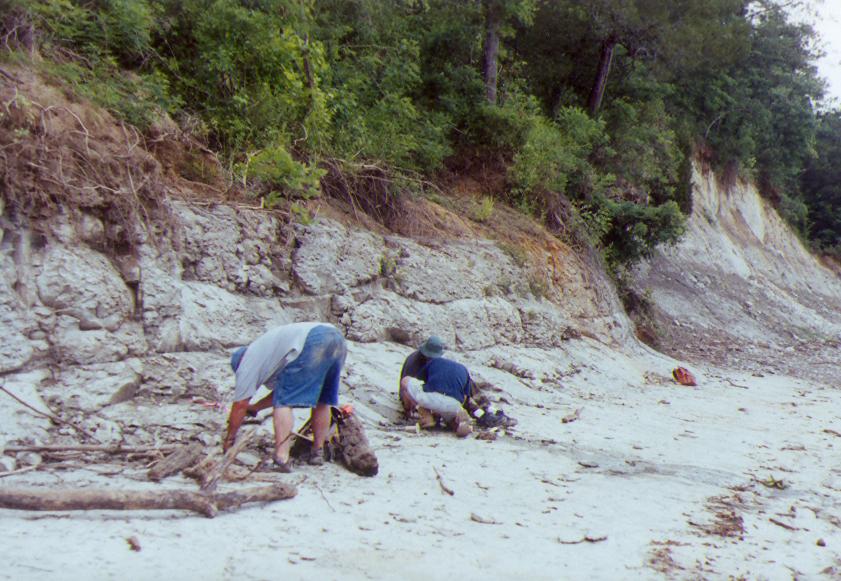
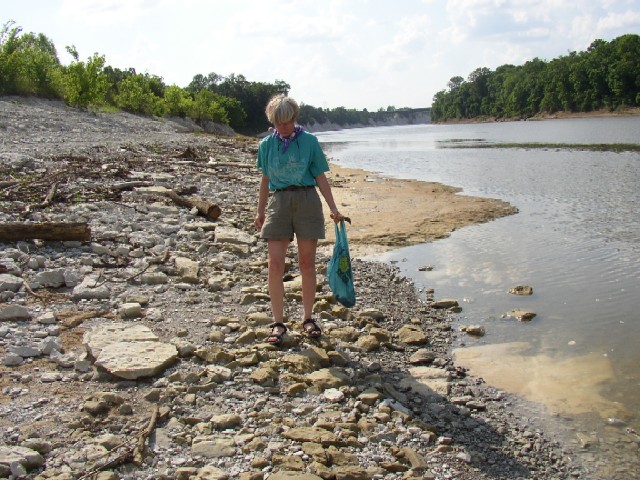
Another boat trip, this time in Sumter county, at a river site with huge chalk bluffs. (The lake level at the Demopolis Lock was 74.28 feet above sea level). The fossils we collected are from the marl limestone sequences in the Arcola Limestone Member (Late Cretaceous Campanian 83-74 mya). Last year, Dr. Charlie Smith, who has done many years of research on this site, came with the group and provided a wonderful lecture and handouts to the group. This year we found a number of straight cephalopod segments, gastropods up to 6cm in diameter, fish dermal spine, and ammonite pieces. But the real prize of the trip was several mosasaur vertebra found in three separate "piles" in a 15 foot area along the riverbank. Vicki found the first fossil vertebra, which was standing on end, and had only the top exposed. After convincing Greg to come look, there were decisions to be made. Do we leave it here in place and take the chance of the river rising and washing it away? We noticed this area had been under a heavy layer of pea gravel the last time we were here, and the pea gravel had disappeared. Do we trench it and extract the bone, or use a plaster jacket over the whole thing? The decision was to take the bone out, not take the chance on having it wash down the river, and protect it with a plaster jacket. However, after excavating around the bone, it was discovered a small but sturdy piece of the chalk could be extracted, making the plaster jacket unnecessary.
As Bobby came over to see what all the fuss was about, he saw "odd shapes" sticking out of the chalk about 15 feet before he got to where Greg was working, and after looking closely, realized it was several more vertebra. Steve came over to assist in excavating this new pile of bones. The other part of the group had gone to another nearby beach, and were basking in the sun (and I suspect they went swimming based on Nancy's drenched appearance!). They decided to ride back over after all the hard work had been done, and see what we had found. Then Jan asked if we had looked under that tree trunk beside us. Well, no. So the trunk was moved, and low and behold, there were about 5 more vertebra under it, which were also excavated. So this was truly a group find, and everyone got to work on the excavations, initial cleaning, and proper packing.
Bill, with the assistance of Leisa, did a great job on the site survey and drawings. Greg, who worked many years with the paleontologists at Red Mountain Museum, supervised the excavation and has been preparing the fossil bones for display. Thanks to all for the fine work and photos! (NOTE: any professional paleontologist who desires to study these fossils, please send your request via email.)
Afterwards, a number of members went to another river site in Sumter county to collect marcasite.
Bill Cunningham also contributed to this report.
(Photos courtesy of Nancy Kenfield, Bill Cunningham, Vicki Lais, and Greg Mestler.)
WOW !
(Click images for larger view.)
Lets get going!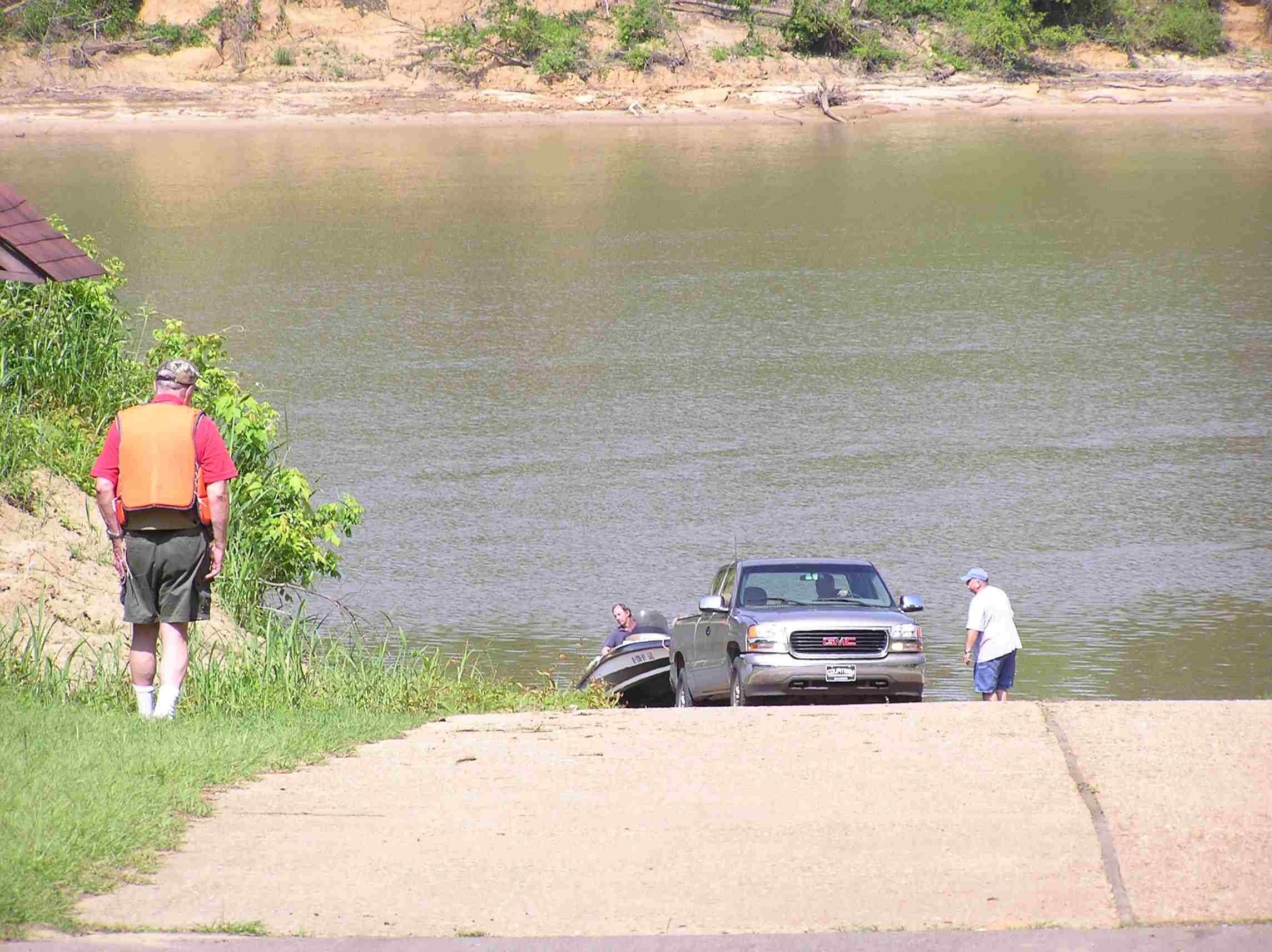
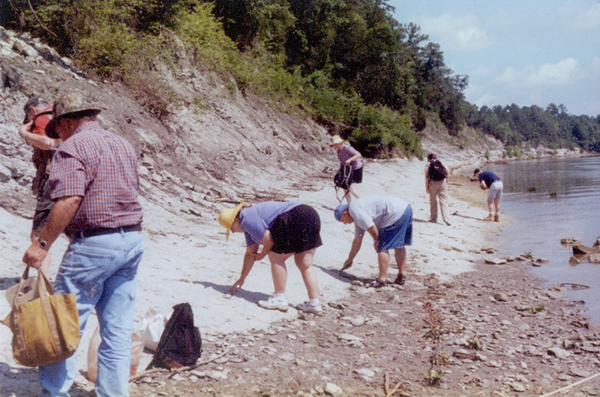
Hey, guys, pose for me!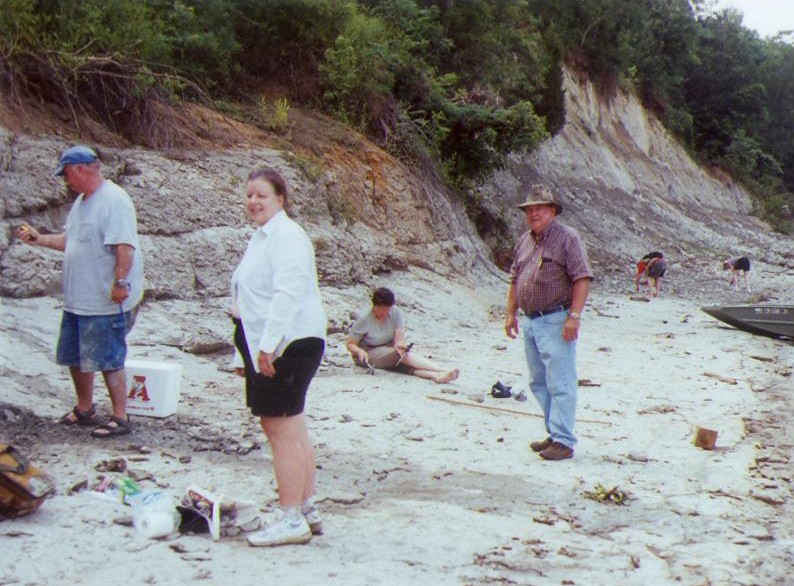
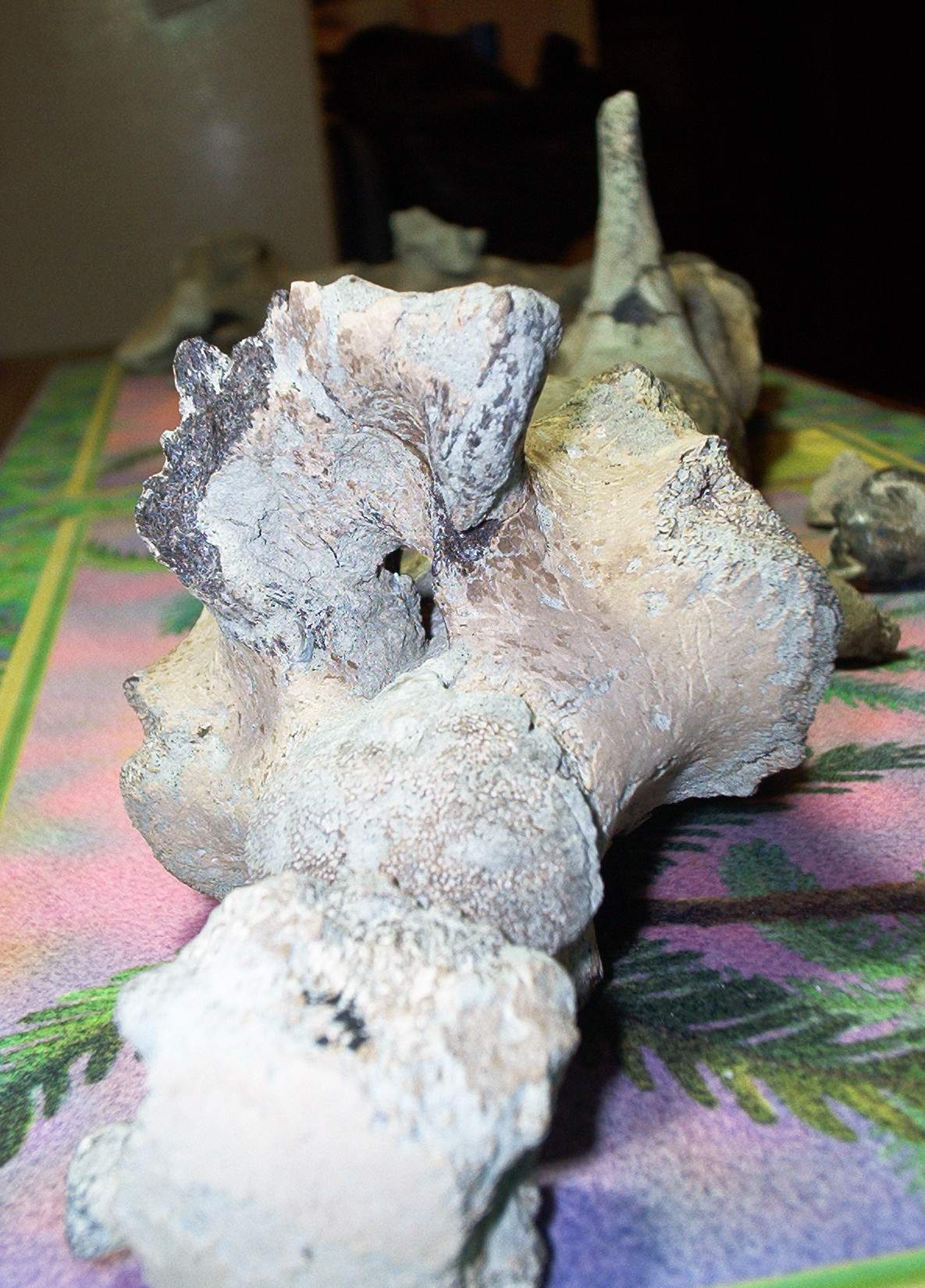
In large photo above, this is the leftmost vertebra, immediately after excavation. 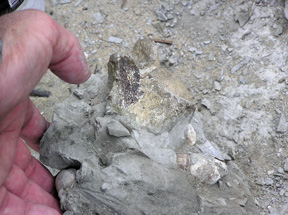 Top view of vertebra.
Bottom view. 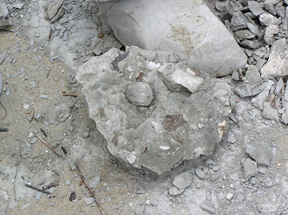
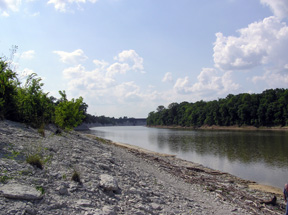
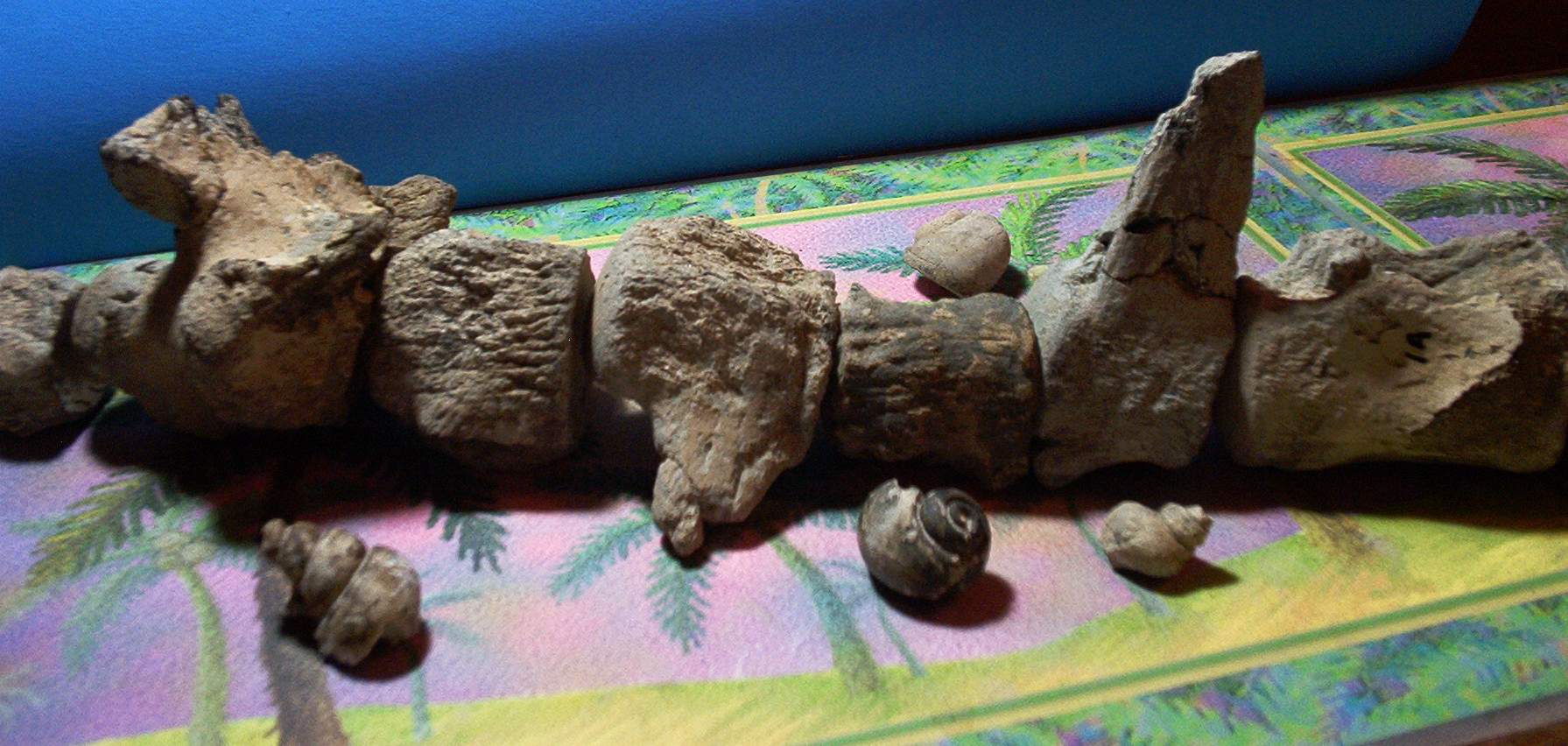
One of the many gastropods found. 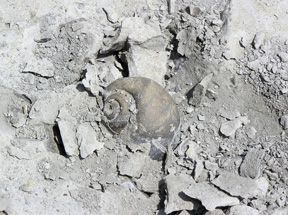
What did you find?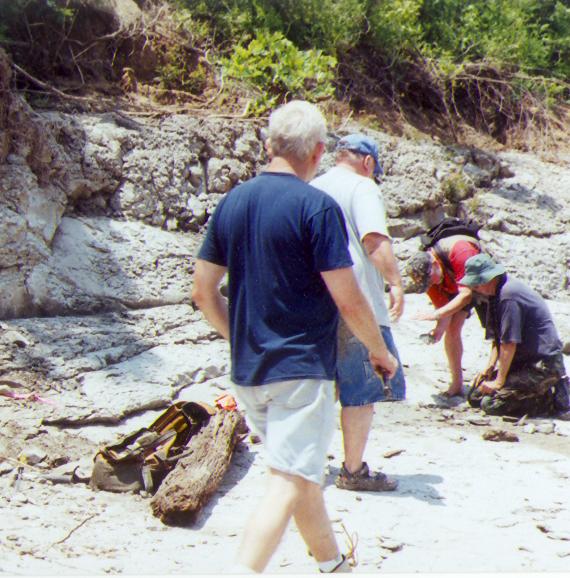
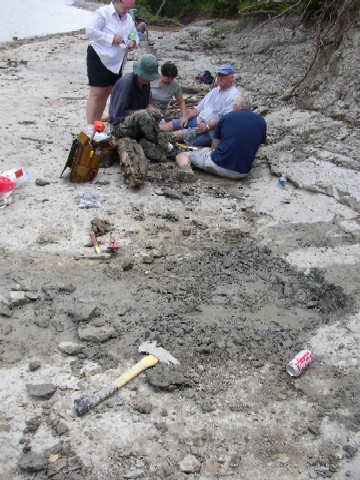
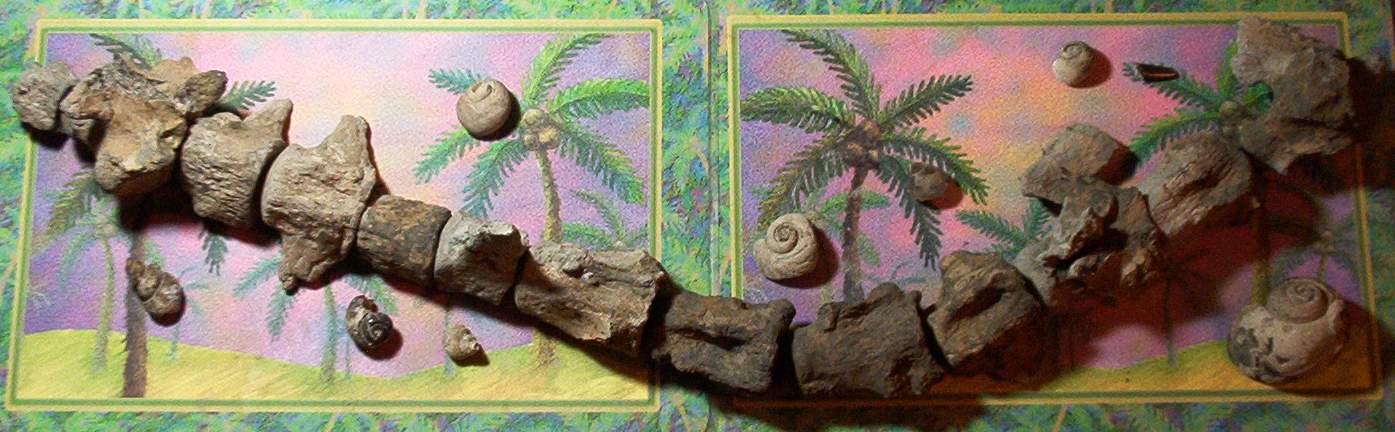
Vertebral column extends 7 meters from near Coke can to several feet beyond the excavators.
Yes, we get dirty.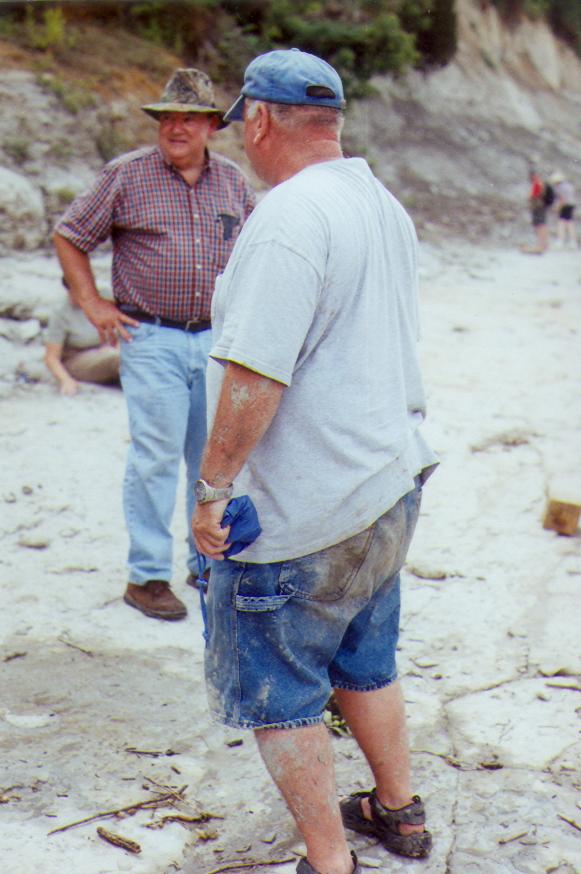

The excavation site had a small drainage problem...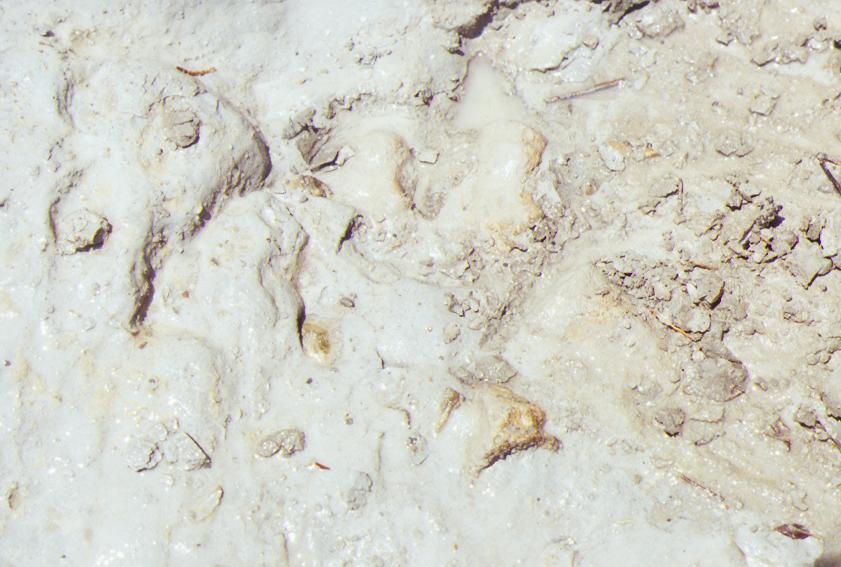
Samples of typical finds - ammonite, straight cephalopod, gastropod, turritella, limpet, oyster.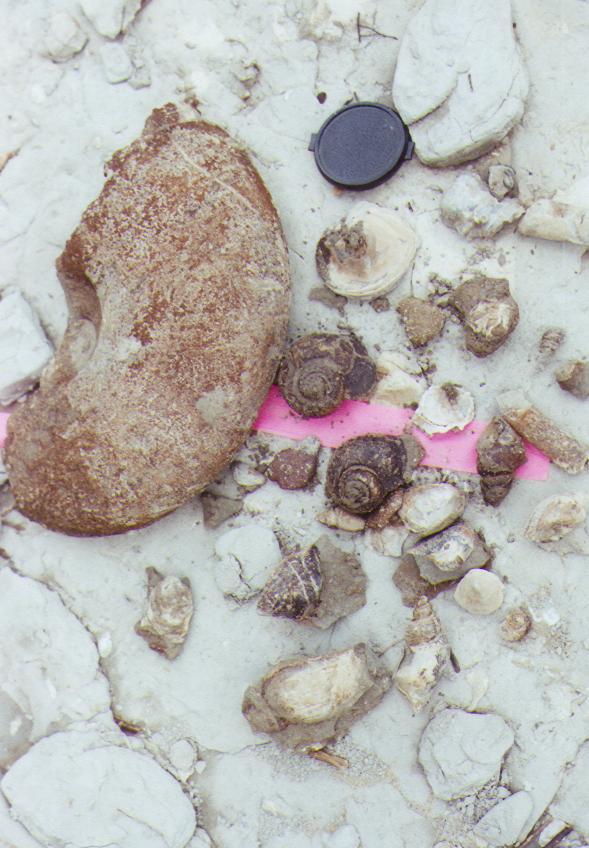
Steve with his latest treasures.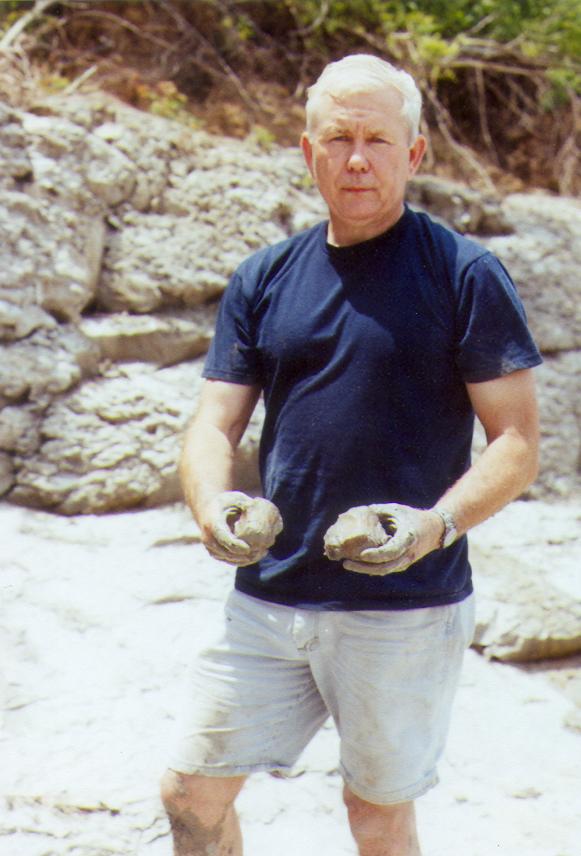
Bobby washing mud off the vertebra.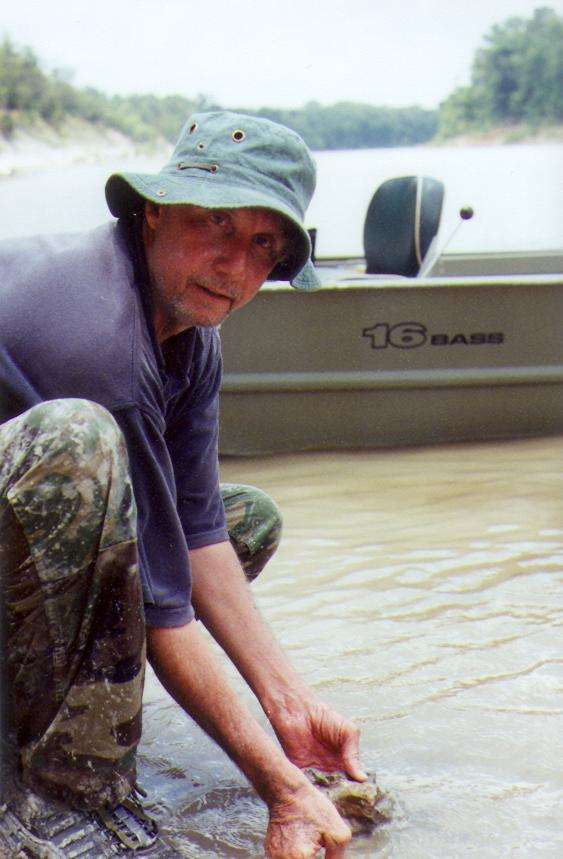
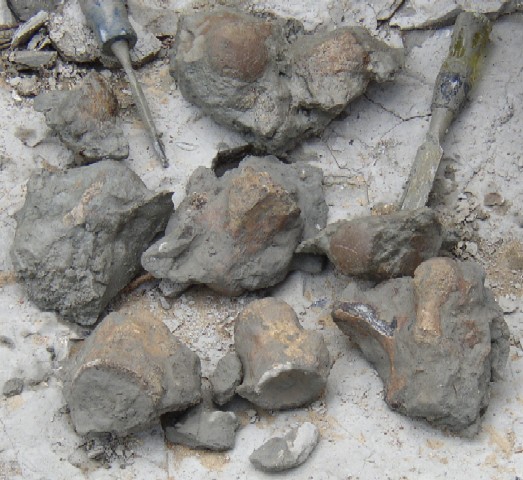
Group of eight vertebra.
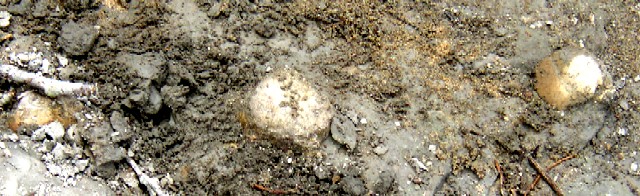
Three vertebra in situ (about 15cm apart)
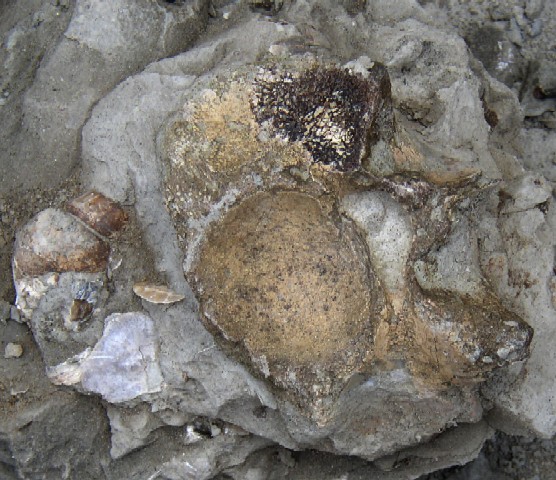
A vertebra in matrix (caudal concave discoid about 5cm)
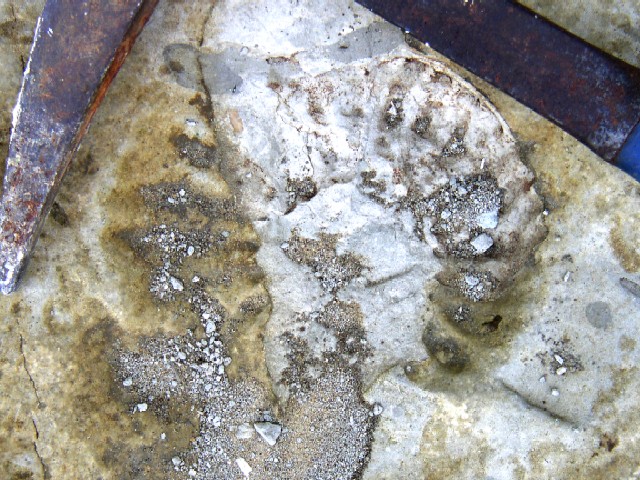
Ammonite impression (about 30cm)
Local wildlife.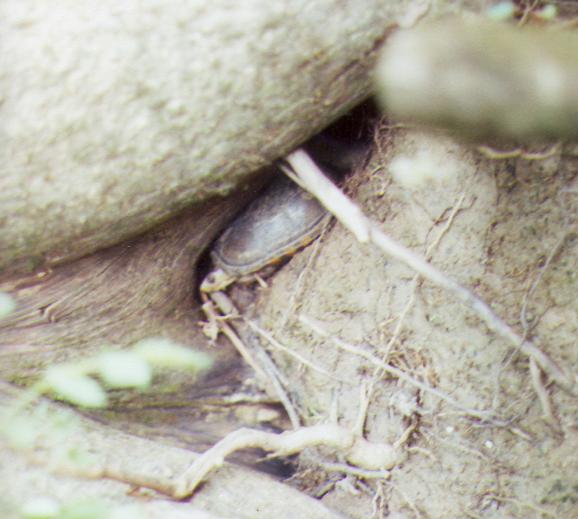
Water hyacinths are pretty, but is an invasive species that destroys our rivers and lakes, and it is prohibited to sell it in the state of Alabama. Thick infestations can make boating or swimming impossible.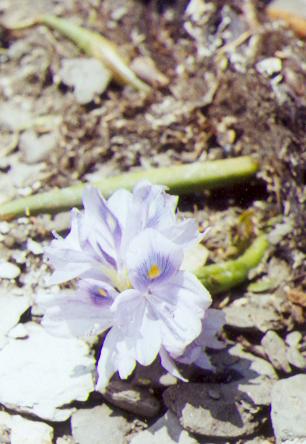
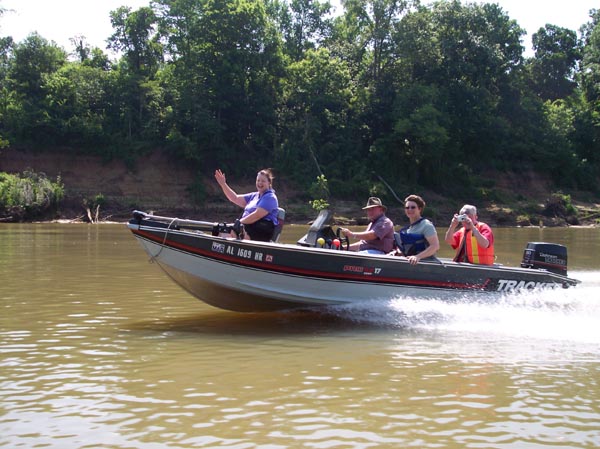
Several members traveled to another Sumter County location to collect marcasite.
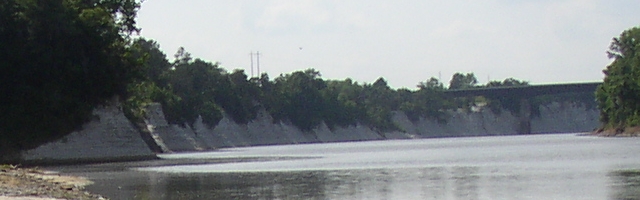
White chalk cliffs in Sumter County, AL.
February 16, 2003 - Pickens Co, AL
The BPS trip this month was to Pickens County, AL, where the group collected from the Selma Chalk formation at several new locations. A new member found her first ever shark tooth in the washes where we were collecting. There is a lot of history in this area that most people in Alabama are not aware of. One of the more unusual stops was to view the "face" etched into the courthouse window in Carrollton, Alabama.
(Photo courtesy Greg Mestler.)
February 2, 2003 - Cretaceous Fossils, Lowndes Co, MS
The January field trip was held on February 2, 2003. BPS members collected in the Selma Chalk formation in Lowndes county Mississippi.. We visited several new sites where the group has never collected. Some nice specimens were found, including a large fossil turtle bone, and numerous fossil shark teeth.
(Photos courtesy Greg Mestler.)


