08-09-vl-croc-4570
Back at the lab, James showed us the difference in size of the baby crocodile we found in the gully, and what is normally found in Alabama. This scute is the smallest one found in Alabama thus far.

Back at the lab, James showed us the difference in size of the baby crocodile we found in the gully, and what is normally found in Alabama. This scute is the smallest one found in Alabama thus far.
James Lamb pulls out a tray of fossil crocodile bones, to show us the difference in the size of the baby crocodile bone we've found, and what is normally found in Alabama. He is holding the same bone in both hands.

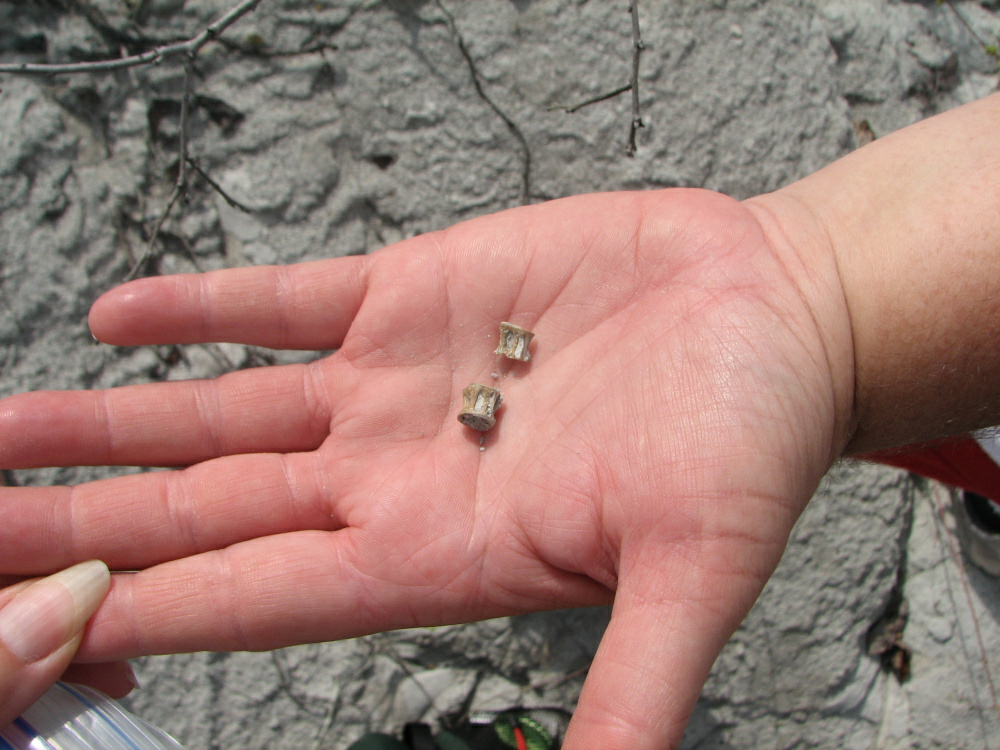
A large number of shark vertebra were found on the side of this chalk bank. More vertebra, both whole and broken, littered the ground below, where they had washed down the gully. After collecting, washing and sorting out the pieces, it was discovered there were approximately 20 whole vertebra found at this spot.

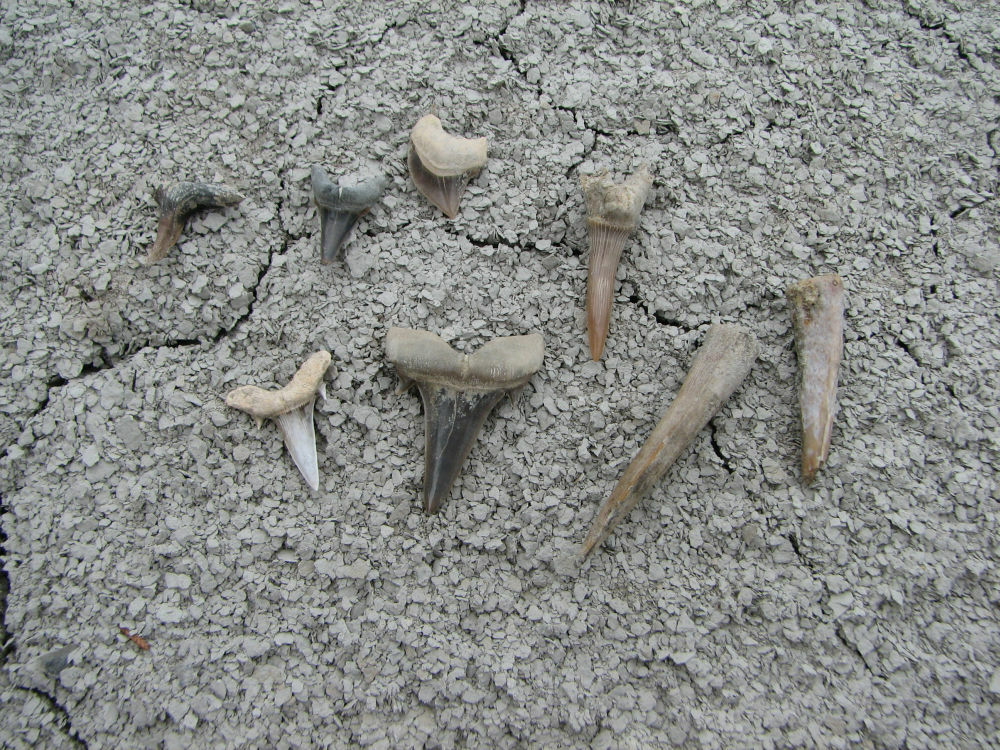
Shark teeth and a couple of enchodus teeth
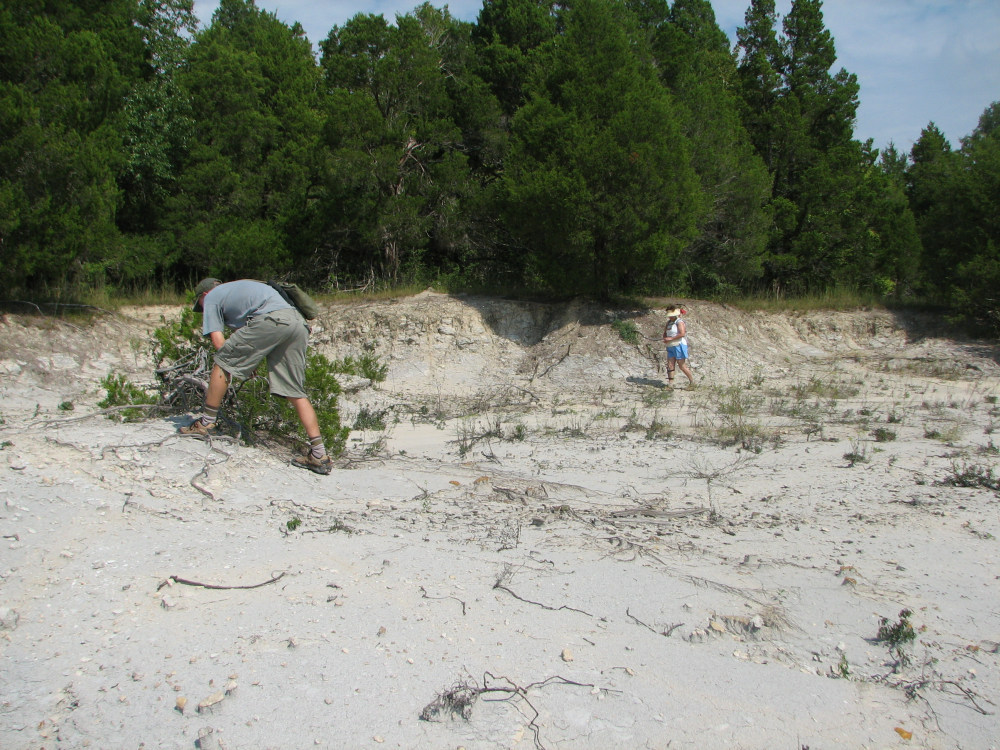
This is the location where the baby crocodile bone and scutes were found. James and Claire are sifting the dirt down the gully from the find, in hopes of finding more scutes and bones.

When we first arrived at the gully, it was difficult to find anything. No matter where we looked, it didn't seem like there was anything other than rocks and broken shells.
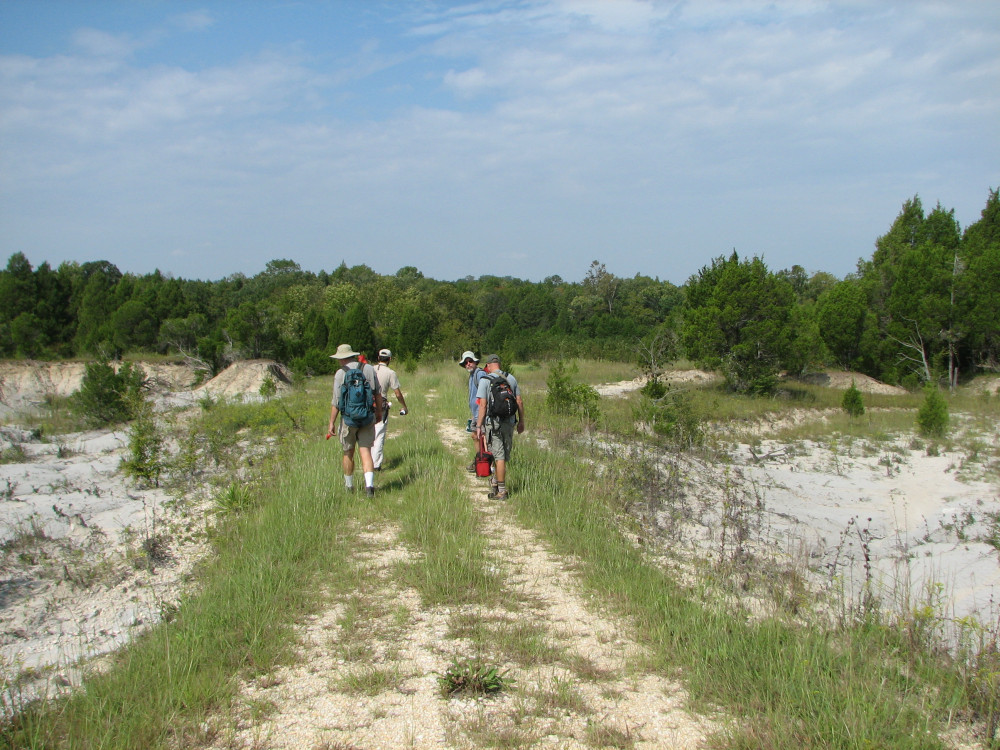
After a slight delay, well, a very long delay, due to a mixup in who was going to call who, we finally gained access to the site. To get to this new set of gullies, we had to drive in, then park and walk the rest of the way.
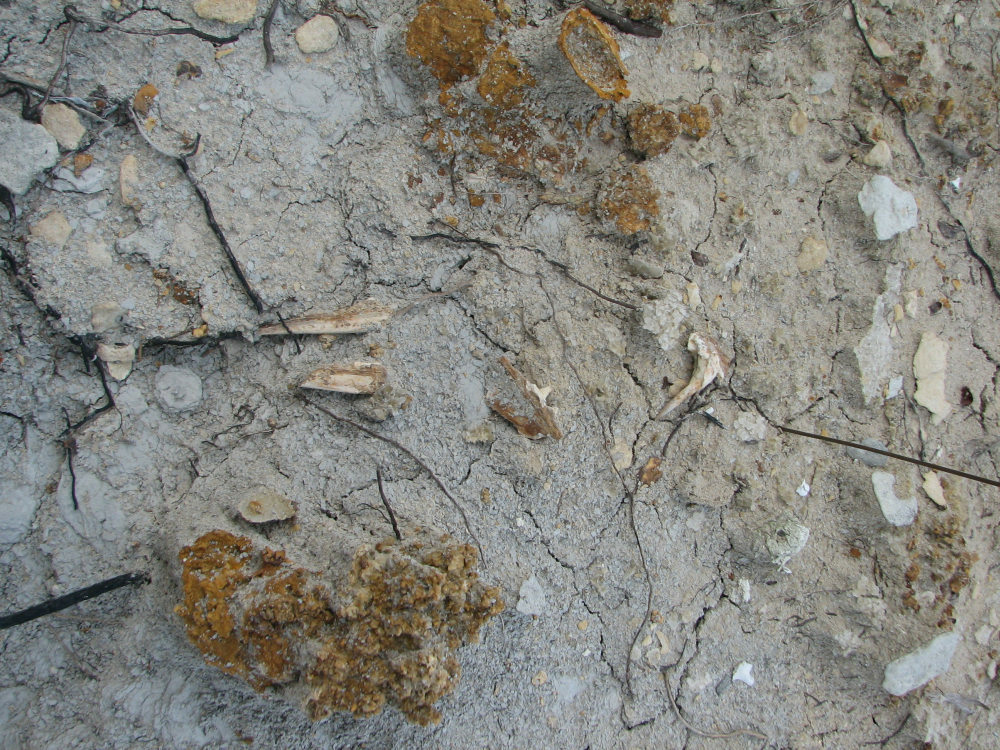
Very badly worn fish bones, based on the tooth, it looks like a type of enchodus.